Home › Free › Cash stuffing in Australia: a plain-English guide
Cash stuffing in Australia: a plain-English guide
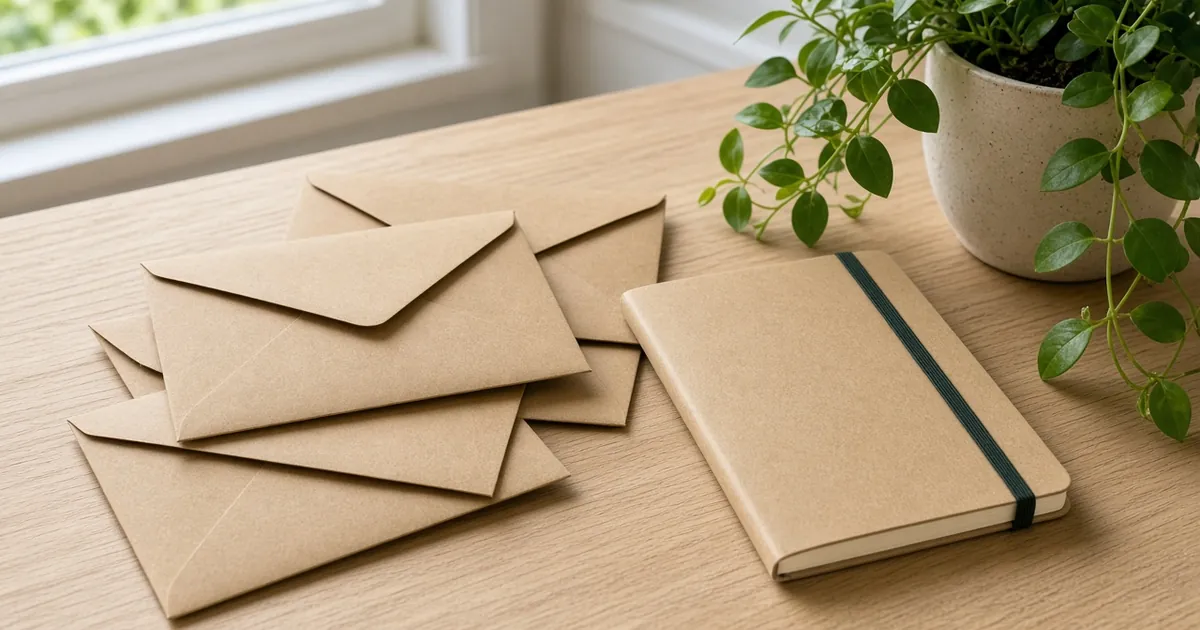
Cash stuffing is a hands-on twist on envelope budgeting. On payday you withdraw part of your pay in cash and divide it into labelled envelopes, one for each spending category: groceries, fuel, takeaway, gifts and so on. When an envelope is empty, that category is done until next payday. It took off on social media, and plenty of Australians use it to get a grip on everyday spending. This guide explains how cash stuffing works in Australia, how to start, its honest pros and cons, and how to run the same idea digitally if carrying cash does not suit you.
How cash stuffing works
- Start with your budget. Work out your take-home pay and the bills that are paid by direct debit or transfer. Those stay in the bank.
- Pick your cash categories. Choose the flexible spending that tends to blow out: groceries, takeaway and coffee, fuel, personal spending, kids' activities, gifts.
- Set an amount per pay. Look at what you have spent in recent weeks and pick realistic amounts.
- Withdraw and stuff. On payday, withdraw the total and split it into labelled envelopes.
- Spend only from the envelopes. Take the right envelope, or the right amount, when you shop.
- Review on the next payday. Leftovers can roll over, go to savings, or be part of a "no-spend" challenge.
Sinking funds: the other half of cash stuffing
Many cash stuffers also keep envelopes for bigger, less frequent costs. These are called sinking funds: rego, car servicing, Christmas, birthdays, school costs, a holiday. You add a small amount every payday, so the money is ready when the bill arrives. For larger amounts, many people keep sinking funds in a separate savings account rather than as cash at home, which is safer and may earn interest.
What you need to start
- Envelopes, either plain ones from the supermarket or a binder with zip pockets. Budget binders are sold in Australian discount and stationery stores, but plain envelopes work just as well.
- Labels for each category.
- A small tracker or notebook to record what goes in and out of each envelope.
- A safe place to keep the cash at home.
You do not need to buy anything fancy. The method works because you can see and touch the money, not because of the binder.
The honest pros and cons
What people like
- It is visible. Watching an envelope thin out is a powerful brake on spending.
- It is simple. No apps, no categories to reconcile, no surprise card transactions.
- It builds awareness. After a few pays, most people know exactly what their groceries or takeaway really cost.
What to watch out for
- Safety. Keeping a lot of cash at home or in your bag carries a risk of loss or theft. Keep amounts modest.
- Not everywhere takes cash. Some Australian businesses are card-only, and online shopping needs a card.
- ATM access. Depending on where you live and bank, getting cash out may mean a trip or a fee. Check your bank's fee schedule.
- No interest. Cash in an envelope does not earn anything, so large sinking funds may be better in a savings account.
- Records. Cash leaves no automatic trail, so a simple tracker helps if you want to see patterns over time.

Cash stuffing without the cash
If carrying cash is not practical, you can keep the method and skip the notes. Some people open several bank accounts or "buckets" (many Australian banks allow multiple sub-accounts) and give each one an envelope name. Others track envelopes in an app or spreadsheet and keep the money in one account. The rule is the same: once a category's money is gone, it is gone until next payday. Our envelope budget guide for Australia covers digital envelopes in more detail.
Making it work on a fortnightly pay
Most cash stuffing advice online assumes US-style weekly or monthly pay. If you are paid fortnightly, stuff envelopes for the full fortnight, then split groceries into two weekly halves so the second week is not empty. For sinking funds, convert yearly costs to a per-pay amount by dividing by 26.
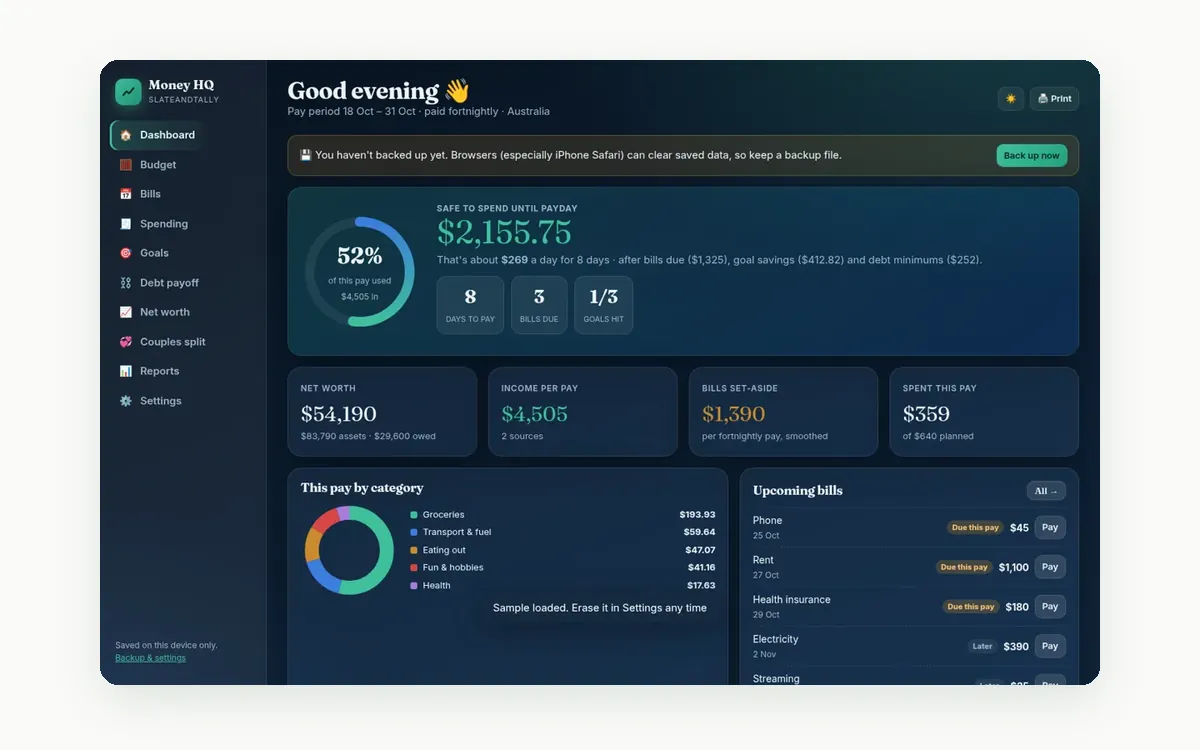
 Money HQYour whole money life in one browser app: payday-aware budget, bills calendar, savings goals, debt payoff and net worth.See the app →
 Sinking Funds JarsSave a little each pay for the big bills you know are coming: rego, insurance, Christmas, school fees, holidays.See the app →
Cash stuffing challenges
Challenges are a fun way to keep momentum. Popular ones include a no-spend week, saving every $5 note you receive, or a savings challenge where you tick off amounts as you stuff them. If you like the idea, see our Savings Challenge Tracker (A$19).
Track your envelopes and sinking funds
Whether you stuff real cash or keep it in the bank, a tracker makes the method easier to sustain. Our Sinking Funds app shows each fund's target, due date and progress, and tells you exactly how much to move into each jar this pay.
A jar for every big cost (rego, insurance, Christmas, school fees, holidays) with target, due date, progress and a per-pay amount, a payday split that tells you how much to move into each jar this pay, and a history of every top-up and spend. It works offline in your browser, your data stays on your device, and there is no bank login. Secure checkout via Payhip.
See the Sinking Funds app · A$19
Want the whole budget too? The Fortnightly Budget (A$29) plans every pay, and there are free printables here, no sign-up needed.
Frequently asked questions
What is cash stuffing?
A budgeting method where you withdraw cash on payday and divide it into labelled envelopes for each spending category. When an envelope is empty, that category is done until next payday.
Do I pay my bills in cash too?
Usually not. Most people keep bills paid by direct debit or transfer from the bank and only use cash for flexible spending.
Is it safe to keep cash at home?
Large amounts of cash carry a risk of loss or theft. Many people keep envelope amounts small and hold bigger sinking funds in a savings account.
Can I cash stuff without cash?
Yes. Use separate bank accounts or buckets, or track envelopes in an app, and apply the same rule: when it is gone, it is gone until payday.
What are sinking funds?
Savings set aside a little each pay for known bigger costs, like rego, Christmas or school fees, so the money is ready when the bill arrives.
General information only, not financial advice. Keep cash safely, and check your bank's fees for ATM withdrawals and extra accounts. For help, see moneysmart.gov.au or a free financial counsellor.