Home › Free › Christmas market side hustle in Australia: what to sell, costs and tax basics
Christmas market side hustle in Australia: what to sell, costs and tax basics

Christmas markets are one of the friendliest ways to try a side hustle in Australia. School fetes, twilight markets, makers' markets and community Christmas fairs all want stallholders from November into December, and shoppers turn up ready to buy gifts. This guide covers what tends to sell, how to work out your stall costs before you book, how to price so you actually make money, and the tax basics, including the ATO's hobby vs business question.
Christmas crafts that suit a market stall
The best market products are quick to understand, easy to carry home and priced for gifting. Ideas that suit a Christmas stall:
- Decorations: hand-painted baubles, felt or timber ornaments, wreaths made with Australian natives, macramé hangers.
- Candles and soaps: Christmas scents and gift-boxed sets. Check the labelling and safety rules that apply to what you make.
- Personalised gifts: names on stockings, ornaments or gift tags. Taking orders on the day can boost sales, so plan how you'll get items to buyers.
- Printed goods: cards, gift tags, wrapping paper and prints.
- Edible treats: shortbread, fudge, rum balls and jams are popular, but food usually needs extra council approvals, so check with your local council and the market organiser before you plan a food stall.
- Kids' items: Santa sacks, advent calendars and colouring kits.
Choose a small range you can make in batches. Three to five products done well usually look better on a table than twenty one-offs, and batching keeps your material costs down.
Stall costs to budget for
Stall fees vary a lot by market, city and size of site, so get the real figure from the organiser. Before you book, list everything the day will cost you:
- Stall or site fee: sometimes with a bond or application fee.
- Public liability insurance: many markets ask for it. Ask the organiser what cover they require.
- Gear: gazebo, weights, table, tablecloth, signage, display stands, lights for twilight markets.
- Materials and packaging: everything that goes into each product, plus bags, boxes and tags.
- Payments: a card reader and its transaction fees, plus a cash float.
- Getting there: fuel, parking and food on the day.
- Permits: food, and sometimes other goods, may need council approval.
Gear is a one-off cost you can spread over several markets. Fees, materials and travel come back every time.
A worked example (made-up numbers)
These figures are made up to show the method. They aren't typical prices or results.
| Item | Example amount |
|---|---|
| Stall fee (one market) | $80 |
| Travel and parking | $20 |
| Packaging and card fees (estimate) | $30 |
| Gear, spread over 4 markets ($200 ÷ 4) | $50 |
| Fixed costs for the day | $180 |
| Materials per bauble | $3 |
| Price per bauble | $15 |
Each bauble leaves $12 after materials. To cover the $180 of fixed costs, you'd need to sell 15 baubles ($180 ÷ $12) before you make anything for your time. If you can't see yourself selling that many, change something: a cheaper market, a higher price, a bundle deal, or a second product.
How to price your crafts
A simple formula: materials + your time + a share of the stall costs + a margin. Many first-time stallholders leave out their time and the stall fee, and then wonder why a busy day didn't feel worth it. A few tips:
- Time yourself making one batch, then work out the minutes per item.
- Offer a range: a low-cost add-on, a main gift and a premium bundle.
- Show prices clearly. Shoppers often walk past unpriced tables.
- Round prices to make cash change easier.
Budgeting the whole season
If you're doing several markets, set a season budget. Total your expected stall fees, materials and gear up front, decide how much you're willing to spend before your first sale, and track sales after each market. Keep side hustle money apart from your household budget so a slow market doesn't eat into the Christmas grocery money. Some sellers use a separate bank account for this, which also makes records easier.
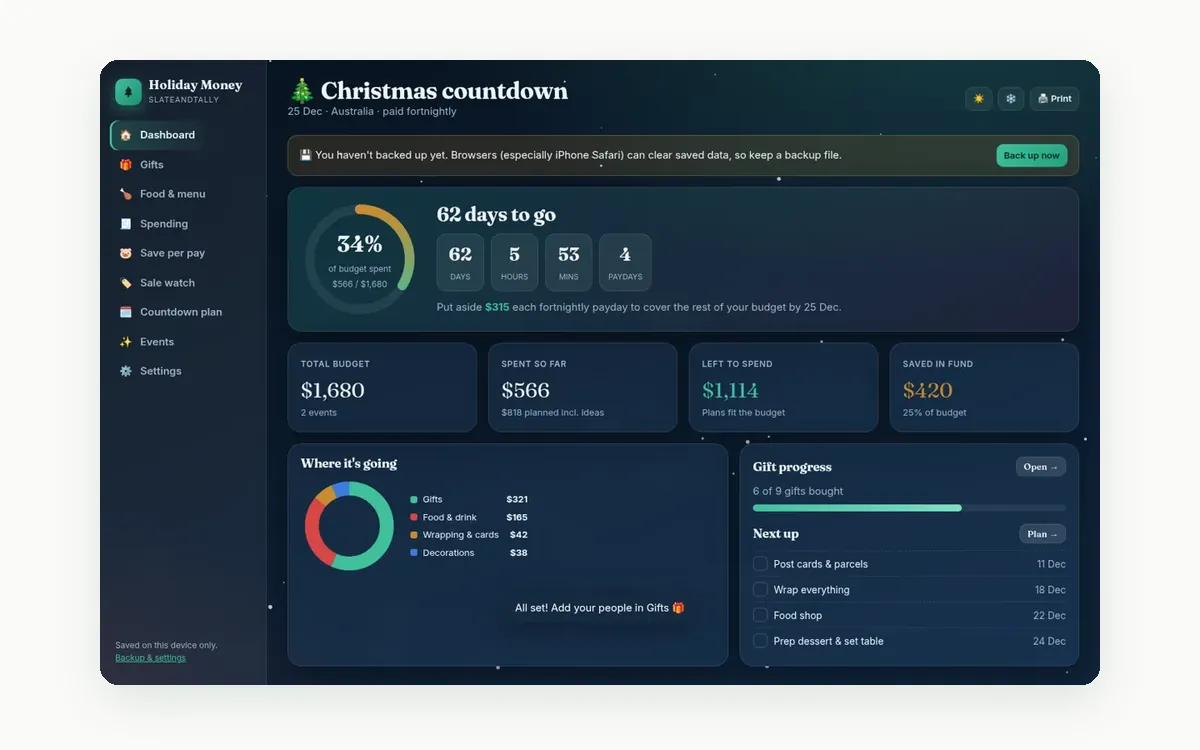
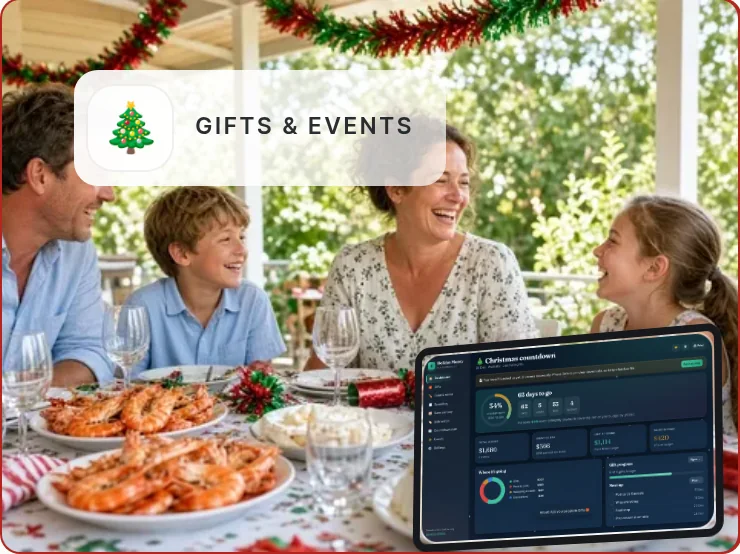 Christmas PlannerPlan Christmas, birthdays and events against one budget: gift lists per person, event costs and a savings countdown to the big day.See the app →
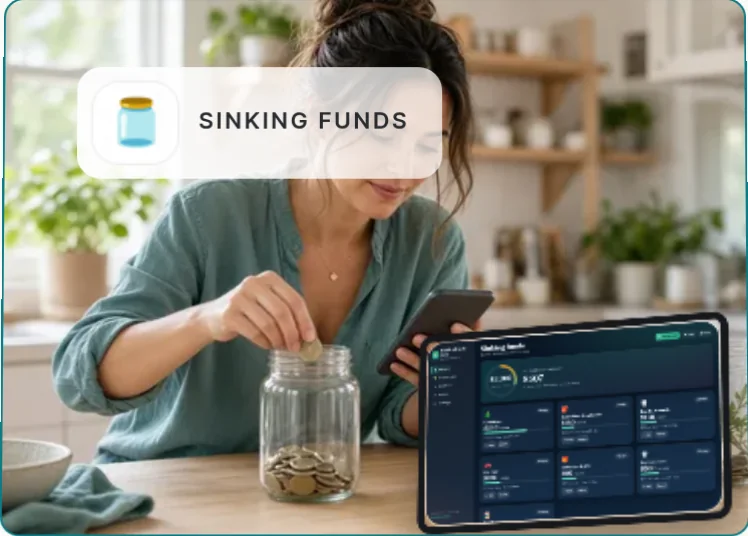 Sinking Funds JarsSave a little each pay for the big bills you know are coming: rego, insurance, Christmas, school fees, holidays.See the app →
Tax basics: hobby or business?
This is general information, not tax advice. The ATO says that generally a business involves continuous and repeated activities you do for the purpose of making a profit, and that activities aren't a business when they're a hobby or recreation from which you don't seek to profit. Its checklist asks questions like whether you intend to and have a prospect of making a profit, whether the activities are repeated and continuous, and whether you advertise and sell your goods to the public, rather than just to family or friends. The more you answer yes, the more likely it's a business.
The ATO also warns that if you're starting to earn money from doing these activities regularly, you may be carrying on a business without realising it. Even if you're not in business, you may still need to declare certain payments as assessable income.
The business.gov.au comparison sums up the differences:
- Hobby: you don't need to declare hobby amounts to the ATO, and you can't claim a deduction for losses from your creative work.
- Business: you declare your income in your annual return and can claim deductions for business expenses. Without an ABN, other businesses must withhold 47% from payments they make to you.
If your stall is a business and your GST turnover reaches $75,000 or more, you must register for GST within 21 days of going over the threshold. Most Christmas stalls won't reach that, but it's worth tracking if you sell all year. If you're unsure where you stand, check ato.gov.au or speak to a registered tax agent.
Keep records from your first market
Even if you think it's a hobby, simple records help if things grow. Note sales for each market, keep receipts for materials, fees and gear, and track how much you've set aside for tax.
Our Side Hustle Tax app does this in your browser. You log sales by income stream and expenses by category, choose a tax set-aside %, and it runs a rolling 12-month check against the $75,000 GST threshold.
Income by stream, expenses by category with a receipt-saved tick, a tax set-aside % you choose, and a rolling 12-month GST turnover check. It works offline in your browser, your data stays on your device, and there is no bank login. Secure checkout via Payhip.
See the Side Hustle Tax app · A$29
Planning your own Christmas spending too? The Christmas & Events Money Planner keeps gifts and events on one budget.
Frequently asked questions
Do I need an ABN to sell at a Christmas market?
Not always. A hobby isn't eligible for an ABN, but if you're carrying on a business, an ABN makes things easier. Without one, other businesses must withhold 47% from payments to you. See business.gov.au.
Is selling crafts at markets a hobby or a business?
It depends on your activities. The ATO looks at things like profit intention, whether sales are repeated and continuous, and whether you sell to the public. See the ATO: Are you in business? page.
Do I pay tax on market stall income?
If it's a business, you declare the income in your tax return and can claim business expenses. Hobby amounts generally don't need to be declared, but some payments may still be assessable. Check ato.gov.au or a registered tax agent.
Do I need to register for GST?
Only if your business's GST turnover is $75,000 or more, or you choose to. You must register within 21 days of going over. See the ATO GST page.
How do I work out if a stall is worth it?
Add up the fee, travel, packaging, card fees and a share of your gear. Then divide by what each item leaves after materials. That's how many items you need to sell to break even.
Does the app need an account or bank login?
No. It works offline in your browser and your data stays on your device.
General information only, not financial or tax advice. Example figures are made up. For your situation, check ato.gov.au, business.gov.au or speak to a registered tax agent.