
Sole trader spreadsheet for Australia: simple bookkeeping that's ready at tax time
Plenty of Australian sole traders, from tradies and cleaners to photographers, rideshare drivers and side-hustlers, don't need full accounting software. What they need is a tidy record of money in and money out, sorted into categories, with GST worked out if they're registered, so tax time takes an afternoon instead of a week. A good sole trader spreadsheet does exactly that.
This guide covers what records the ATO expects you to keep, how to set up a simple income and expense spreadsheet, how GST and BAS fit in, and when a spreadsheet stops being enough. It's general information, not tax advice, so check anything specific with the ATO or a registered tax agent.
What records does a sole trader need to keep?
The ATO requires you to keep records that explain your business income and expenses, generally for five years from when you lodge your return. In practice that means:
- Sales records: invoices you issued and payments received.
- Expense records: receipts, tax invoices and bank statements for business purchases.
- Records for assets you've bought, car and home-office use, and any wages or contractor payments.
Digital copies are fine as long as they're clear and complete, so a phone photo of each receipt saved to a folder is a great habit.
The four tabs every sole trader spreadsheet needs
- Income: date, client, invoice number, amount, GST (if registered) and whether it's been paid.
- Expenses: date, supplier, category, amount, GST and a note on business use if it's a mixed personal and business cost.
- Summary: totals by month and by category so you can see profit at a glance.
- Tax and BAS figures: GST collected and GST paid per quarter, plus totals for your tax return.
Do I need to register for GST?
You must register for GST once your GST turnover reaches $75,000 a year (rideshare and taxi drivers must register regardless of turnover). Below that it's optional. If you're registered, your spreadsheet needs to separate the GST component of each sale and purchase, because that's what goes on your Business Activity Statement (BAS).
BAS made simpler
Most small businesses that lodge BAS do it quarterly. If you lodge yourself, the usual due dates are 28 October, 28 February, 28 April and 28 July (tax agents can get later dates). When your spreadsheet groups sales and purchases by quarter, the key BAS figures, such as total sales (G1), GST on sales (1A) and GST on purchases (1B), come straight off the summary rather than from a shoebox of receipts.
Setting money aside for tax
Sole traders don't have tax withheld from their income, so the bill arrives in one go after you lodge. A simple habit is to move a fixed percentage of each payment into a separate "tax" savings account. Your spreadsheet can show how much you should have set aside based on your profit so far. Ask your tax agent what percentage suits your situation, as it depends on your total income and deductions.
Claiming expenses correctly
You can generally claim expenses that are for running your business. If something is used for both personal and business purposes, such as a phone, car or internet, you can only claim the business portion. Record the business-use percentage next to the expense so your accountant can see how you worked it out. Car expenses have specific rules, such as the cents-per-kilometre or logbook methods, so keep a logbook if you drive for work.
Excel or Google Sheets for bookkeeping?
Either works. Google Sheets is free, accessible on your phone (handy for logging a receipt straight after buying something) and easy to share with an accountant. Excel suits people who prefer to work offline.
When a spreadsheet isn't enough
If you employ staff (Single Touch Payroll), hold lots of stock, or have hundreds of transactions a month, accounting software or a bookkeeper is likely to save you time. For most solo operators, a well-structured spreadsheet is enough.
Our sole trader spreadsheet
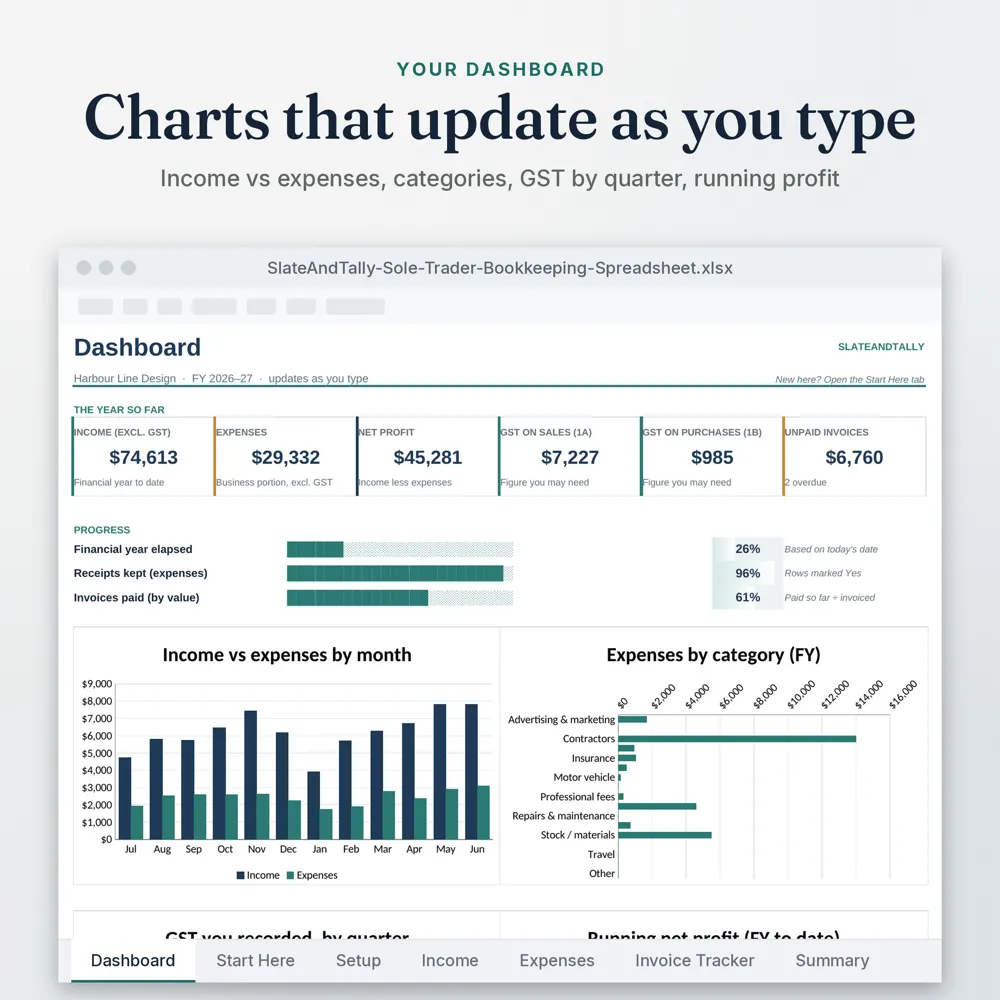
The SlateAndTally Sole Trader Bookkeeping Spreadsheet is built for Australian sole traders. It has 10 tabs, including Income, Expenses, Invoice Tracker, quarterly Tax & BAS figures, Profit & Loss and a one-page Accountant Summary, plus a dashboard with charts that update as you type. If you also need receipts, work-from-home and car logbook records, the Australian Tax Time Bundle groups those sheets together.
A simple weekly routine
Ten minutes a week keeps your records current: enter any invoices you sent, mark paid invoices, add the week's receipts with photos saved to a folder, and move your tax set-aside into a separate account. At the end of each quarter, check the BAS figures against your bank statements before you lodge. At the end of the financial year (30 June), send your accountant the summary instead of a pile of paperwork.
Frequently asked questions
Can a sole trader use a spreadsheet instead of accounting software?
Yes. The ATO doesn't require specific software, only accurate records kept for five years. Many sole traders use a spreadsheet successfully.
When does a sole trader have to register for GST in Australia?
When GST turnover reaches $75,000 a year, or straight away if you provide taxi or rideshare services.
When is BAS due?
For quarterly self-lodgers, usually 28 October, 28 February, 28 April and 28 July. Tax agents may have later dates.
How long do I need to keep business records?
Generally five years from when you lodge your tax return.