How to Save $1,000 Before Christmas: A Realistic 8-Week Plan for Aussies
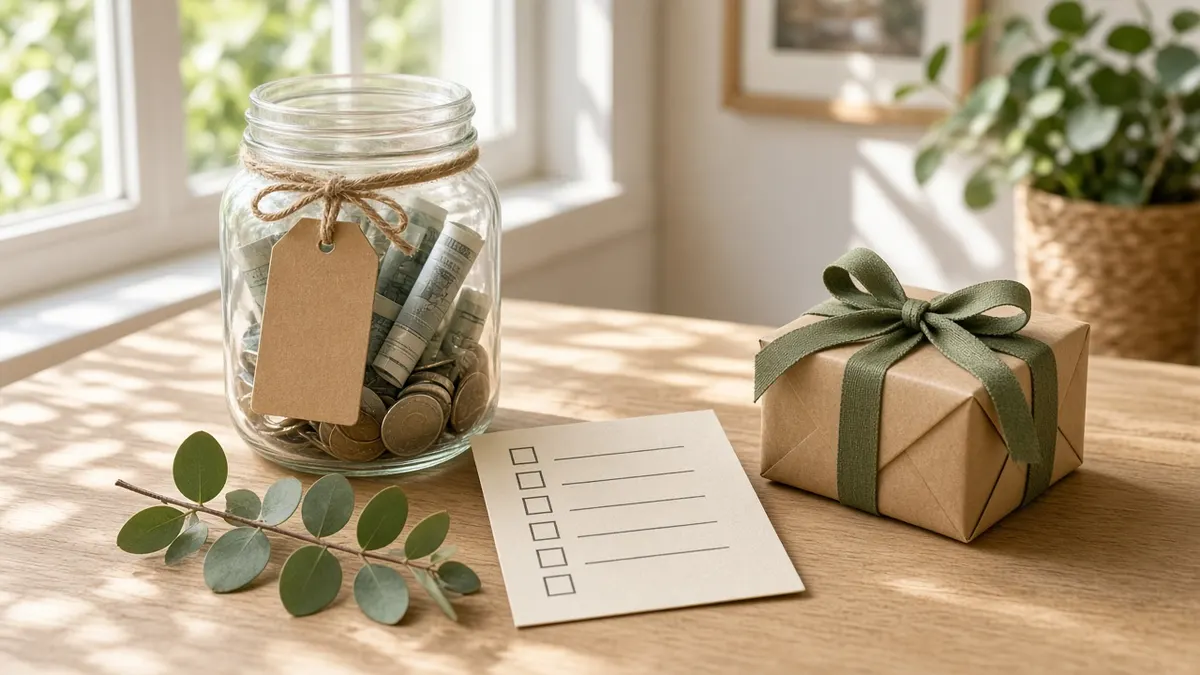
A$1,000 sounds like a lot to find before Christmas, especially when the cost of living is already stretched. Broken down by pay, it's a lot more doable. Here's a realistic plan to save $1,000 before Christmas in Australia, starting from the end of October.
What $1,000 looks like per pay
From the end of October there are about eight weeks until Christmas Eve. That works out to roughly:
- Weekly pay: about A$125 a week for eight weeks.
- Fortnightly pay: about A$250 a pay for four pays.
- Monthly pay: about A$500 a month for November and December.
Not sure exactly how many pays you've got? Use our pays until Christmas calculator. If the per-pay number is too big, don't give up: the steps below find money from more than one place, and $600 saved still beats $1,000 on a card.
Step 1: Give the $1,000 its own account
Open a separate savings account (or a labelled jar if you use cash) and set an automatic transfer for payday. Money that never sits in your everyday account is much harder to spend by accident. A sinking fund is perfect for this.
Step 2: Cancel or pause what you don't use
Go through your last two bank statements and list every subscription: streaming, apps, gym, delivery memberships. Pause anything you won't use before January. Whatever you save goes straight to the Christmas account the same day.
Step 3: Sell what's sitting in the cupboard
Outgrown kids' clothes and toys, baby gear, furniture, tools and electronics sell well before Christmas on Facebook Marketplace and Gumtree. Put every sale straight into the Christmas account. If you're selling regularly or buying to resell, read our side hustle tax guide first.
Step 4: Run a no-spend week or two
Pick one or two weeks in November with no takeaway, no coffees out and no online shopping beyond the essentials. Eat from the freezer and pantry first. Plan meals ahead so the grocery shop stays small; our meal planner on a budget helps.
Step 5: Return the cans and bottles
Most states and territories run a container deposit scheme that pays 10c for each eligible can or bottle. It's small money, but a household that keeps a bag in the garage can add a steady amount to the jar through summer.
Step 6: Trim the Christmas list itself
Saving is only half of it. Set a gift budget per person, suggest a Kris Kringle for the extended family, and share the cooking for Christmas lunch. Every dollar you don't need to spend is a dollar you don't need to save.
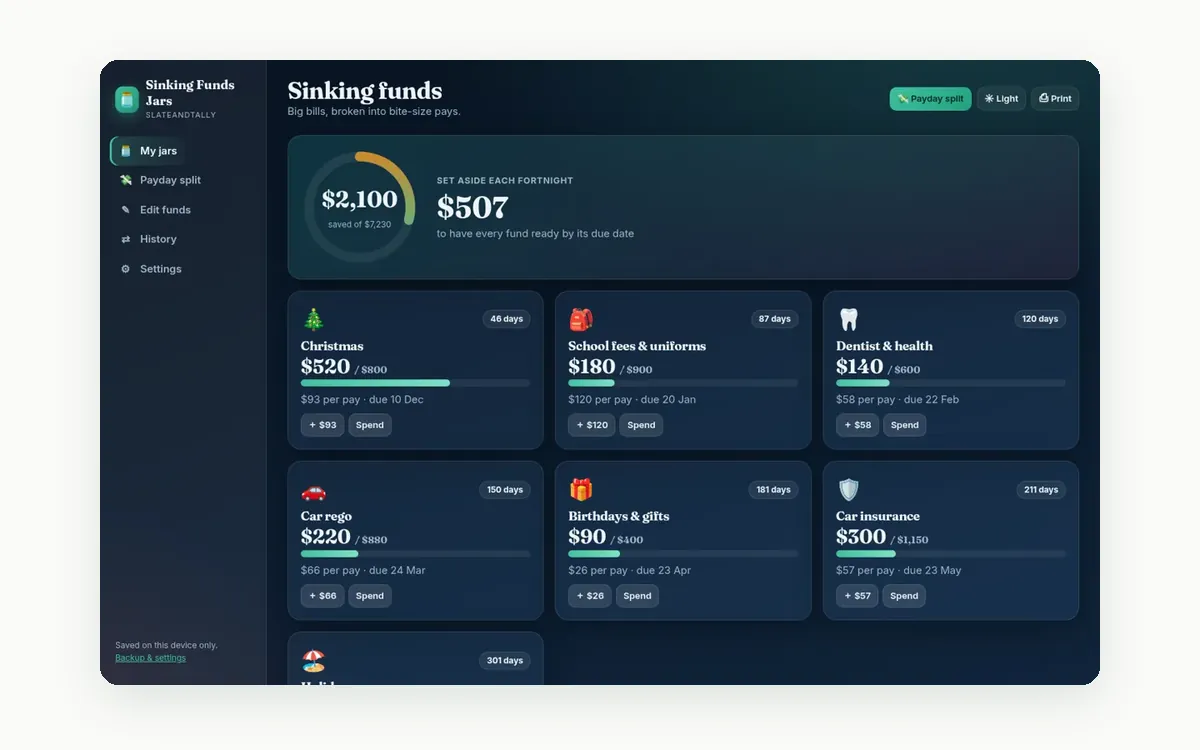
 Sinking Funds JarsSave a little each pay for the big bills you know are coming: rego, insurance, Christmas, school fees, holidays.See the app →
 Christmas PlannerPlan Christmas, birthdays and events against one budget: gift lists per person, event costs and a savings countdown to the big day.See the app →
 Savings Challenge TrackerPick a savings challenge, tick off each deposit and watch the total grow toward your goal.See the app →
Step 7: Track it where you'll see it
A simple tracker you tick off each pay keeps you going. Seeing the total climb from $0 to $1,000 is surprisingly motivating, and it shows straight away if you're falling behind while there's still time to catch up.
If you can't get to $1,000
That's okay. Work out what you can realistically save, then plan Christmas around that number instead. Our Christmas on a budget checklist helps you plan a great day on less.
FAQ
How can I save $1,000 before Christmas in Australia?
Divide $1,000 by the pays you have left (about A$250 a fortnight or A$125 a week from late October), move it to a separate account on payday, and top it up by cancelling unused subscriptions, selling unused items and running a no-spend week.
How much do I need to save each week to get $1,000 by Christmas?
From the end of October there are about eight weeks until Christmas Eve, so roughly A$125 a week, or about A$250 a fortnight.
What if I can't save $1,000 before Christmas?
Save what you realistically can, then plan Christmas around that number: set a gift budget per person, suggest a Kris Kringle and share the cooking.
Where should I keep my Christmas savings?
A separate savings account or a labelled cash jar works best, so the money isn't mixed in with your everyday spending.
General information only, not financial or tax advice. For tax questions, check ato.gov.au or a registered tax agent.