Home › Budget Tracker (Australia): Track Spending Against Your Plan
Budget Tracker (Australia): Track Spending Against Your Plan
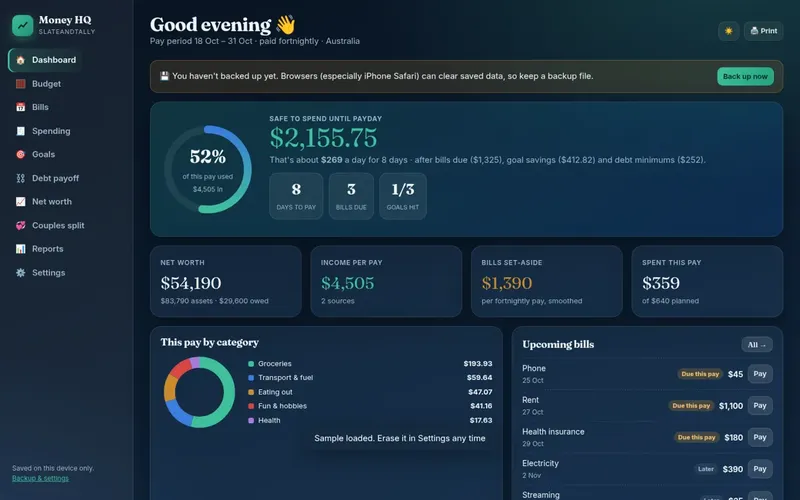
A budget tracker shows whether your plan is working. Here is how to track spending in a way that takes minutes a week, what's worth tracking, and the tracker options for Australians.
Why track at all?
A budget is a plan. Tracking is how you find out whether the plan matches real life. Most people who track for even one month find at least one category, often takeaway, groceries or small subscriptions, that costs far more than they thought. Once you know, you can fix the plan or fix the habit. You don't have to track every coffee forever. The goal is to track long enough to make the plan accurate, then check in briefly each payday.
Three ways to track a budget
1. Category totals each payday (easiest)
Once a fortnight, look at your bank transactions and add up the spending in each category: groceries, fuel, eating out, bills and other. Write the totals next to your planned amounts. This takes about ten minutes and catches most problems.
2. Log as you go
Write down each purchase as it happens, in an app or notebook. It's more effort, but it makes you think twice before spending, which is why many people find it changes habits faster.
3. Separate accounts
Many Australian banks let you open several accounts for free. Put bills money in one, spending money in another and savings in a third. Your spending account balance is your tracker: when it's low, you've hit your limit. This pairs well with a written plan.
What to track
| Category | Why track it | Tip |
|---|---|---|
| Groceries | Usually the biggest flexible cost | Track per shop, not per item |
| Fuel and transport | Changes with prices and driving | Note the cost per fill |
| Eating out and takeaway | Where small spends add up fast | Count delivery fees too |
| Subscriptions | Easy to forget | Search statements for repeats |
| Buy now pay later | Instalments hide the real total | Track the full purchase price |
| Kids | School costs and activities vary | Use a sinking fund for big ones |
Example figures only, for illustration. Use your own numbers.
Planned vs actual: reading your tracker
At the end of each pay or month, compare planned with actual for each category. Then ask three questions. Was the plan unrealistic? Raise it and take the money from somewhere else. Was it a one-off, like a birthday? Make it a sinking fund next time. Was it a habit? Pick one small change for the next fortnight. Change one thing at a time. Trying to fix everything at once is the quickest way to give up.
| Category | Planned | Actual | Difference |
|---|---|---|---|
| Groceries | A$400 | A$462 | −A$62 |
| Fuel | A$120 | A$108 | +A$12 |
| Takeaway | A$80 | A$145 | −A$65 |
| Fun money | A$100 | A$90 | +A$10 |
Example figures only, for illustration. Use your own numbers.
Tracking irregular income
If you're a casual worker, gig driver or have a side hustle, track income as well as spending. Log each payment as it arrives and plan from a low, typical fortnight. Side hustlers should also track income and expenses for tax time and keep an eye on the GST registration threshold. See our income and expense tracker guide and side hustle tax guide. This is general information only. Check your situation with the ATO or a registered tax agent.
Tracker options
- Your bank app: many banks automatically categorise spending. It's free, but the categories may not match your budget.
- A spreadsheet: add an "actual" column next to your plan. See the budget spreadsheet guide.
- Free printable: our free downloads include printable budget sheets.
- Apps that connect to your bank are another option. Ours don't connect to your bank: you type your numbers in, and your data stays on your device.
Track these too
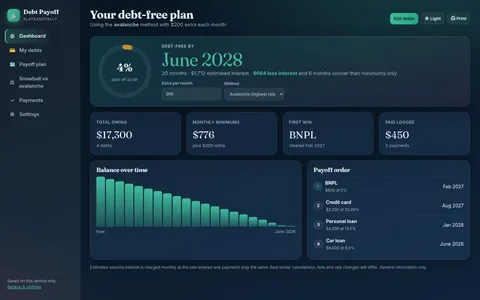
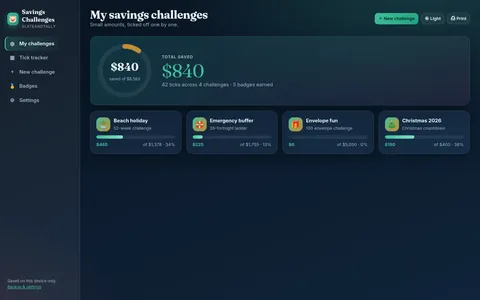
Beyond spending, it's motivating to track progress on goals: debt going down, savings going up, and your net worth over time. Seeing a debt balance fall each month is often what keeps people going. See the debt snowball calculator, savings tracker and net worth tracker guides.
A simple fortnightly tracking routine
- Open your bank app on payday and filter the last 14 days.
- Tag or note each transaction with a category: groceries, fuel, bills, takeaway, kids, other.
- Add up each category and write the total next to your plan.
- Circle anything more than A$20 over plan.
- Decide on one change for the next fortnight, such as one less takeaway night or a meal plan for the week.
- Move any money left in your spending account to savings.
That's it. Ten minutes, twice a month. After two or three months you'll know your real numbers well enough that a quick glance is all you need. If you find you're always over on groceries, a meal plan is often the fastest fix, since it cuts both the shopping bill and the "nothing in the fridge, let's get takeaway" nights.
One more tip: don't judge a single fortnight too harshly. Birthdays, car repairs and school costs make some pays look bad. Look at the trend over two or three months instead. That's the number that tells you whether your budget is really working.
And celebrate the wins. If takeaway came in under plan, move the difference straight to a goal so the progress is visible.
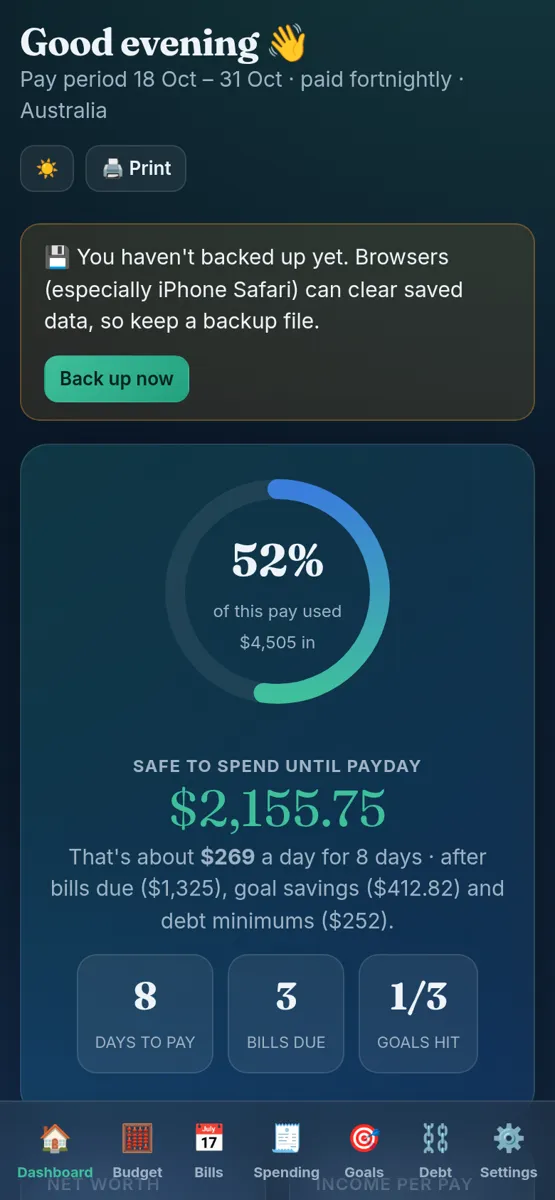
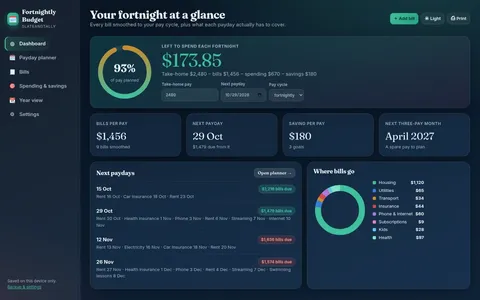
Want to try before you buy? The free Fortnightly Budget Mini is a genuinely free one-page sheet (.xlsx for Excel or Google Sheets, plus a printable PDF) that turns weekly, monthly, quarterly and yearly bills into a per-pay figure. No sign-up needed to download it from the Free page.
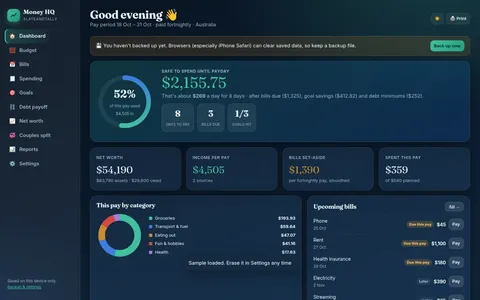
Our paid apps are a different kind of tool to a spreadsheet. Each one is a single HTML file you open in your web browser on a computer, Android phone or iPhone. There's nothing to install, it works offline, your data stays on your own device, and you can export a backup file from Settings. It's a one-off purchase with an instant download, not a subscription.
General information only, not financial or tax advice.
FAQ
What is a budget tracker?
A tool that records what you actually spend so you can compare it with your budget plan.
How often should I track my budget?
A ten-minute check each payday catches most problems. Some people log every purchase as they go.
Do your apps connect to my bank?
No. You enter your own numbers, and your data stays only on your device.
What should I track first?
Groceries, takeaway and subscriptions, as they're where most budgets leak.